REVIEW · RIGA
2 Hours Walking Tour in Legends and Secret of Riga’s Old Town
Book on Viator →Bookable on Viator
Riga’s Old Town runs on legends. This 2.5-hour private walk turns key sights into stories you can actually remember, from golden rooster lore to medieval guild power and a tasting of Riga Black Balsam.
I especially love the way Lina brings the streets to life with clear narration and visual aids, and how you get Riga Black Balsam as more than a roadside souvenir stop. The pacing is also great for first-timers who want to get their bearings without sprinting.
One thing to keep in mind: several church and landmark stops are handled as free portions, even when a ticket is mentioned, so don’t expect every paid entry or tower climb.
In This Review
- Quick Hits Before You Go
- Why This Riga Old Town Legends Walk Works So Well
- Price and What You’re Actually Buying for $108.43 Per Group
- Meeting Point and How the Start/ Pickup Fits Your Day
- St. Peter’s Church: Golden Roosters, 666, and Medieval Meaning
- Ratslaukums Town Hall Square: Markets, Keys, and Riga’s Christmas Firsts
- House of the Black Heads and the Clock on Its Facade
- Roland’s Statue: Freedom Meets the Hanseatic Union
- Rozena iela: The Narrow Street That Got a Nickname
- Bremen Town Musicians: A Wish-Monument With Real Sister-City Links
- Dome Square: Counting Golden Roosters and Spotting the Square’s Pattern
- Riga Cathedral: Pipe Organ Power, Rafael Santi, and Merchant Schedules
- Riga Stock Exchange’s Venetian Gondola and Three Brothers’ Medieval House Complex
- St. Jacob’s Catholic Cathedral, Powder Tower, and Swedish Gate Legends
- Jacob’s Inn and Black Magic Bar: Swedish Soldiers and Alchemist Kunze
- Freedom Monument, Laima Clock, and the Tiny Streets With Big Meanings
- Cat House, Livu Square, and the Guild Buildings That Still Run the City’s Story
- Baltic Way Footprint, a Russian Empire Theatre, and a Street Full of Memory
- St. John’s Church, Old Fort Walls, and Kalēju iela’s River Trace
- Riga Radio and TV Tower: Soviet-Era Height on a Walking Day
- First Christmas Tree Marker and Why Riga Claims Four Capitals
- What Makes the Guide’s Style Feel Different (and the Main Trade-Off)
- Should You Book This Riga Old Town Legends Tour?
- FAQ
- How long is the walking tour?
- How much does the tour cost?
- Is the tour private?
- Do you offer pickup?
- What language is the tour in?
- Are there tastings included?
- Are tickets to churches or landmarks included?
- What if I need to cancel?
Quick Hits Before You Go
- A private group of up to 6 means you can ask questions and slow down when something catches your eye
- Golden rooster symbolism shows up again and again, and you’ll know what to look for
- Riga Black Balsam tasting turns a famous bottle into a real local story, not just a label
- Hanseatic-era details (Roland, guilds, and trading squares) give you a map of how Riga got rich
- Legends with specific places: alchemy doors, “drunk knight” street nicknames, and a few eerie tales with exact stops
- Comfort matters: you’ll want solid shoes for cobbles and lots of walking
Why This Riga Old Town Legends Walk Works So Well
Riga can feel like a pretty postcard at first. This tour helps you read the city instead. You connect the big landmarks into one storyline: who ruled, who traded, what people feared, and how local myths got stamped onto stone and street layouts.
The best part is that it’s designed for real understanding, not just checkboxes. You’ll leave with mental anchors: roosters that mean more than decoration, squares that once functioned as markets and power centers, and guild buildings that still shape the character of Old Town.
This is also a smart fit if you don’t have many hours. In about 2.5 hours, you cover a wide slice of Old Riga while your guide keeps the walking efficient and the story focused.
You can also read our reviews of more walking tours in Riga
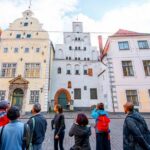
Price and What You’re Actually Buying for $108.43 Per Group
The headline price is $108.43 per group (up to 6), not per person. That changes the value equation fast.
If you spread it across a full group, it can work out to roughly $18 per person for a private guide, a guided walking route, and a tasting of Riga Black Balsam. Even if you’re fewer than 6, private guidance still tends to beat buying multiple separate tickets for time and logistics—especially when a guide points out what you’d miss alone.
Also, the tour isn’t only external sightseeing. Several stops include access to interior or special areas like the free portions of churches, and at least one visit includes a ticketed element. For a short, structured walk, that’s a fair trade.
Meeting Point and How the Start/ Pickup Fits Your Day
The tour meets back at the Grand Palace Hotel on Pils Street 12. Pickup is offered at St. Peter Church in Riga, Reformacijas laukums, so you don’t have to stress about being exactly at the front door of the hotel.
You’ll also use a mobile ticket, and the tour runs daily between 10:00 AM and 6:00 PM (within the listed date range). If you’re on a tight schedule, this flexibility helps you choose a time that matches your energy level.
St. Peter’s Church: Golden Roosters, 666, and Medieval Meaning
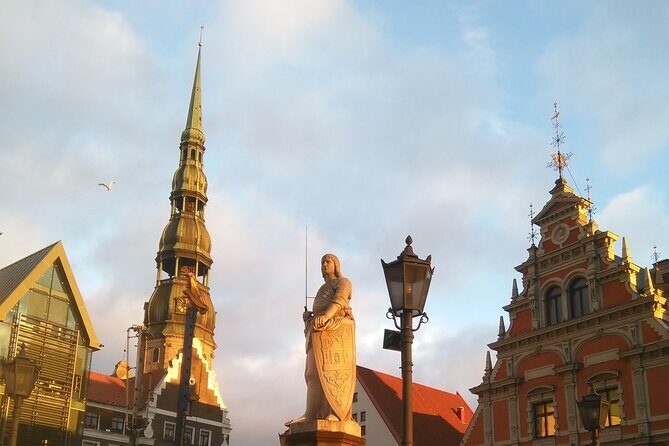
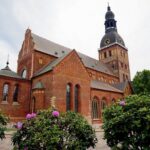
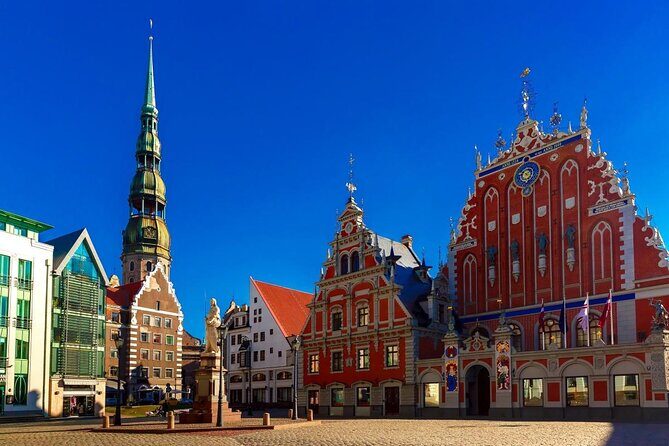
You start with St. Peter’s Church, one of the oldest Lutheran churches in Riga. From the outside, you’ll learn the medieval tradition behind the golden rooster imagery, which sounds simple until you hear what the symbol represented to people at the time.
What makes this stop useful is that it teaches you how to look. You’re not just seeing a pretty roof detail. You’re learning the logic behind why certain symbols ended up on church spaces—and how those symbols were interpreted through a Christian lens as well as popular folklore.
There’s also a darker thread: the story of how 666 affected the fate of the church. Even if legends don’t always match history perfectly, they explain why a place got treated the way it did.
Tip: wear shoes you can trust. Church squares and Old Town streets are a mix of smooth stretches and rough cobblestones.
Ratslaukums Town Hall Square: Markets, Keys, and Riga’s Christmas Firsts
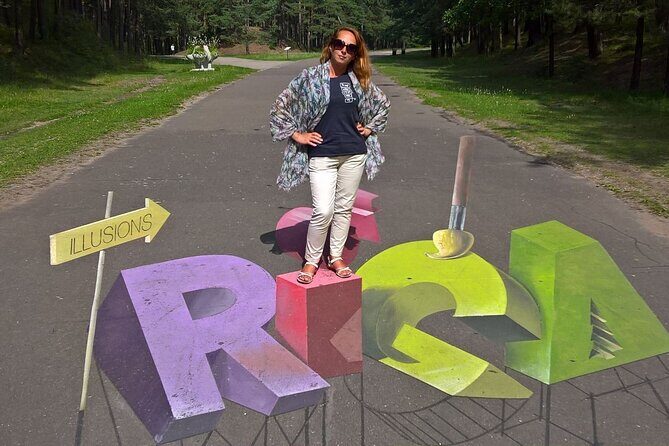
Next is Ratslaukums, Riga’s Town Hall Square—often called the most beautiful part of Old Town. Here, you get context. This wasn’t just a pretty plaza. It was once the city market, where merchants flocked in to trade goods from around the region.
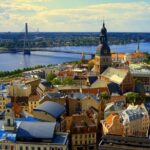
The guide also points you toward the city’s broader story. From this area, you’ll see landmarks across the river line, including the Latvian National Library and references connected to later historical memory places.
Two standout moments for many people:
- You’ll hear the story of the Key to Riga and why it matters.
- You’ll connect the square to early Christmas tree traditions, including a memory place tied to the idea of the first decorated Christmas tree being celebrated in the 16th century.
If you’re the type who enjoys holiday traditions with an origin story, this stop gives you real names and dates to hold onto.
A few more Riga tours and experiences worth a look
House of the Black Heads and the Clock on Its Facade
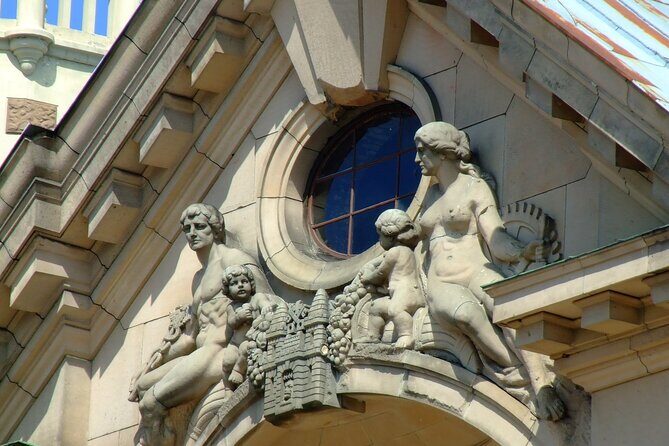
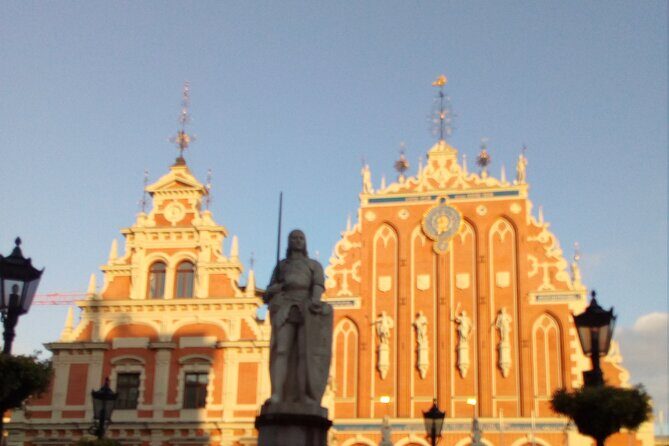
The House of the Black Heads is where the tour leans into symbolism and drama. You’ll get the building’s key decorations explained, plus the history of the brotherhood of the Black Heads.
The guide also focuses on a couple of specific features you’d likely miss if you walked past: the clock on the facade and the deeper meaning behind the building’s alchemical and hermetic symbolism.
A practical upside here: you’re not just staring at architecture. You’re being taught a reading method—what details to track and what they likely meant to past residents.
Roland’s Statue: Freedom Meets the Hanseatic Union
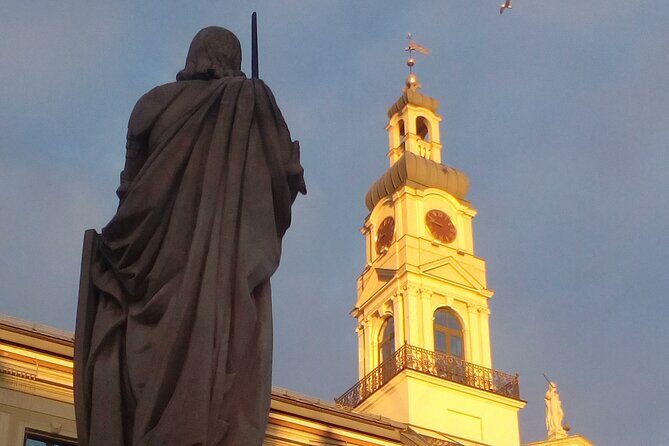
At Roland’s statue, the story shifts to Riga’s political and economic muscle. Roland is presented as a symbol of freedom for the medieval city and also connected to the Hanseatic Union.
Riga’s Hanseatic membership dates to 1283, and the guide makes that timeline feel real. You’ll hear the legend-like details behind Roland’s shield and sword, which turns a statue into an idea about authority and civic identity.
If you’ve ever wondered why medieval cities were so proud of their “rights,” this stop gives you the vibe fast.
Rozena iela: The Narrow Street That Got a Nickname
Then you slip to Rozena iela, known for being Riga’s narrowest street. It’s not just a fun photo stop. You’ll learn why those narrow lanes were associated with nicknames like the streets of the drunk knight.
From the outside, you’ll also see the oldest city hall wine cellar dating to the 13th century—another reminder that Riga’s everyday life (wine, storage, trade) shaped the city as much as wars and rulers did.
Bremen Town Musicians: A Wish-Monument With Real Sister-City Links
You’ll also see Bremen Town Musicians, a monument presented to Riga by Bremen. This isn’t random pop culture copy-pasting. The guide ties it to sister-city history and to the founder of Riga’s bishop, Albert, who had Bremen origins.
You’ll learn who created the monument—Krista Baumgertel—and that it was installed in 1990. That date matters because it shows how modern Riga keeps older cultural relationships alive through gifts and public art.
This is a short stop, but it’s one that helps you connect Old Town Riga with modern relationships and city-to-city networks.
Dome Square: Counting Golden Roosters and Spotting the Square’s Pattern
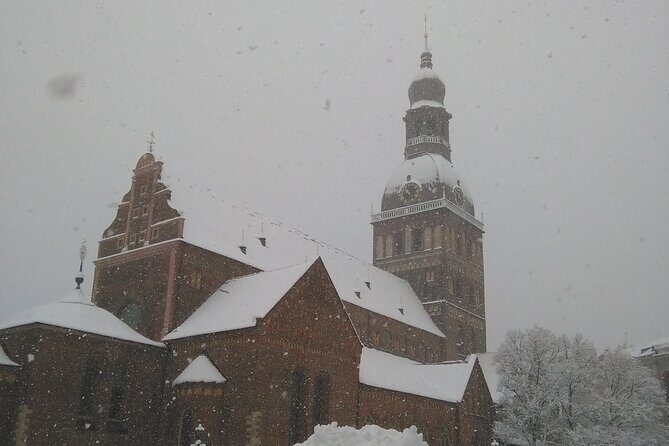
At Dome Square, you’ll see the main Lutheran cathedral from outside and you’ll count the golden roosters in the biggest Old Town square. The guide also shares the square’s “secret geometry,” which basically means you’ll learn how the layout guides movement and attention.
And yes, this is also a seasonal anchor: Dome Square is the place where the main Christmas market happens each year.
This is one of those stops where a little structure makes a huge difference. You won’t just walk past. You’ll understand why the square feels the way it does.
Riga Cathedral: Pipe Organ Power, Rafael Santi, and Merchant Schedules
Inside the cathedral area, you’ll learn about the foundation and construction of Riga Cathedral and hear about the last work by Rafael Santi. You’ll also get a close look at the pipe organ history.
The organ was once described as the biggest in the world in the 19th century, and now it’s treated as one of the best sounding instruments around. Even if you don’t sit through a concert, the context changes how you interpret the space.
One detail that stuck with me is the idea that Riga’s merchants planned their day by looking at the cathedral’s rooster. It’s a small story, but it ties time, daily routine, and religious symbolism together.
Note: the tour includes access to free portions here, so treat this stop as guided highlights rather than a full ticketed museum experience.
Riga Stock Exchange’s Venetian Gondola and Three Brothers’ Medieval House Complex
At the Riga Stock Exchange Building, you’ll hear architectural background and get pointed to the only Venetian gondola in Riga. It’s housed in a 19th-century style described as Venetian neo-Renaissance, and the building now hosts a museum of foreign arts.
This is a great contrast: trading power, foreign connections, and a bit of theatrical architecture—right in the middle of a medieval city.
Then comes Three Brothers, the oldest complex of dwelling houses in Riga. You’ll visit the oldest brother, which dates to the 15th century, and you’ll also explore the museum portion focused on Latvian architecture.
The guide adds extra texture with details like an older coat-of-arms seen in the inner yard. You’ll also hear a story about medieval taxes, including a window tax and how that shaped what houses looked like.
If you like architecture that shows how people actually lived, this is one of the stronger stops. It also tends to work well for families because it’s visual and story-driven.
St. Jacob’s Catholic Cathedral, Powder Tower, and Swedish Gate Legends
You’ll see St. Jacob’s Catholic Cathedral from outside and hear the story tied to the bell known as the bell of the poor sinners. The bell rang when criminals were brought from prison to the Town Hall square for execution. It’s heavy, but it’s the kind of local detail that makes a city feel honest.
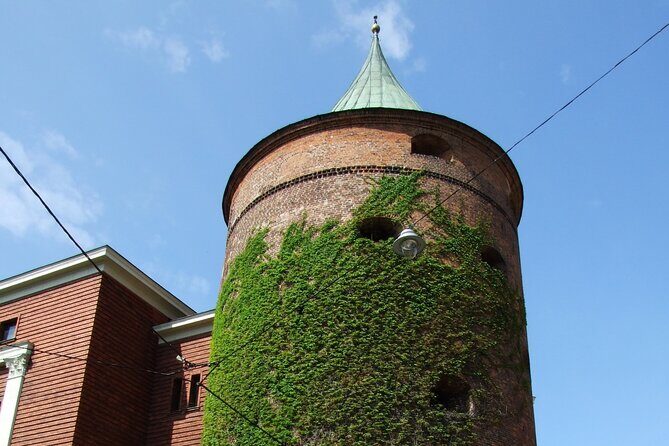
Next, you look at Powder Tower—the biggest and only surviving tower from the 14th century. You can visit the Latvian War Museum that’s hosted there, and admission to the tower and museum is listed as free.
Then the tour heads to the Swedish Gate, Riga’s outer gate from Swedish time. The guide connects it to the house of the city executioner and shares the legend about a Riga ghost.
Even if you don’t love scary stories, these stops teach how infrastructure and fear were built into daily civic life.
Jacob’s Inn and Black Magic Bar: Swedish Soldiers and Alchemist Kunze
Jacob’s Inn is described as the longest building of Old Town, originally serving as barracks for 5,000 Swedish soldiers. Today, it’s practical: souvenir shops, cafés, restaurants, and offices live inside this long structure.
Then you reach Black Magic Bar, where legend and local branding meet. The story says the bar was once a pharmacy where Riga Black Balsam was invented in the 18th century.
Here’s the payoff: you’ll have the chance to sample Riga Black Balsam, and the guide ties it to hidden alchemy symbolism. You’ll also hear about a secret door leading to the laboratory of alchemist Kunze, described as the inventor of the Black Balsam.
If you like tours that treat food and drink as part of the story, not just a souvenir, this is a key moment.
Freedom Monument, Laima Clock, and the Tiny Streets With Big Meanings
Now the walk turns toward symbols of modern identity inside the Old Town mix.
At the Freedom Monument, you’ll hear about its construction during the first Latvian Republic and the significance it holds for Latvian people. The guide also shares hidden symbolism tied to the monument, so you’re not just looking at a statue—you’re learning what the statue was meant to say.
Then you stop at the Laima Clock, a main meeting point. The guide connects the name Laima to the chocolate producer and explains why the name matters locally.
A nice contrast follows with the short street Ķēniņu iela, Riga’s shortest. The guide explains why it became so short many years ago.
Cat House, Livu Square, and the Guild Buildings That Still Run the City’s Story
You’ll see the Cat House, tied to a black cat legend and the way cats became Old Town symbols. This is one of those stops that gets smiles because it’s folklore you can picture instantly.
At Livu Square, you’ll learn the square’s history and hidden symbolism, and you’ll see the monument called Liv’s head.
Then the tour goes into guild power through buildings:
- The Small Guild of Riga, described as a union of craftsmen, built in 1864–66 in neo-gothic style by architect Johann Felsko.
- The Great Guild, linked to merchant guild power and described as existing from 1354 to 1936.
The guide ties the whole merchant-guild story back to Riga’s membership in the Hanseatic League in 1283 and the rise of German guilds in city life.
If you want a clearer picture of how Riga worked economically, these stops help you see the city as a system—not random sights.
Baltic Way Footprint, a Russian Empire Theatre, and a Street Full of Memory
A memorable historical waypoint is the Baltic Way Footprint Monument. The tour explains the event as a human chain of roughly 2 million Latvians, Estonians, and Lithuanians stretching about 600 km from Tallinn to Vilnius via Riga.
You’ll also learn why it commemorated the 50th anniversary of the Molotov-Ribbentrop Pact, held on August 23, 1989, while the Baltic nations were still occupied by the Soviet Union. The monument itself is a small red granite footprint at the crossroads of Kaļķu and Vaļņu, near a McDonald’s.
Then you’ll see an old Russian theatre outside Russia, built in the Russian empire era in the second part of the 19th century, described as Florentine neo-Renaissance. The guide uses it to remind you that Riga’s identity has layers from different empires and eras.
St. John’s Church, Old Fort Walls, and Kalēju iela’s River Trace
Back on the religious and civic side, the tour visits St. John’s Church. Here the story is grim: two Dominican monks were reportedly walled up alive into the wall, and the guide points out where they were found during reconstruction works in the 19th century.
You’ll also see the oldest Riga gate leading to the Dominican monastery, which connects the church to the city’s early defensive and religious layout.
You then spot parts of Riga’s old fortification wall from the 13th century, built during the Livonian order time. It’s a quick stop, but it gives you perspective: Riga wasn’t always open. It was protected.
Finally, you reach Kalēju iela, described as the longest street in Old Town. You’ll learn it once served as an embankment for Riga’s river, and now the street layout shows the old river line. You’ll also hear that blacksmiths worked there.
This is one of those moments where geography becomes story. The street isn’t just a path—it’s a record.
Riga Radio and TV Tower: Soviet-Era Height on a Walking Day
The tour includes a look at the Riga Radio and TV Tower, described as the tallest tower in the European Union. It was built between 1979 and 1989, with funding from the Soviet Union central government, and its highest point reaches 368.5 meters.
This stop changes the pace mentally. You go from medieval symbols and guilds to a single piece of Soviet-era engineering that’s visible as a landmark from far away.
Even if you’re not a tower person, it’s a useful reminder that Riga keeps changing while still carrying older layers.
First Christmas Tree Marker and Why Riga Claims Four Capitals
The tour ends with a stop at the First Christmas Tree Marker, a plaque dedicated to the first decorated Christmas tree of 1510. The guide connects this to Riga being described as the town of four capitals.
It’s a neat way to wrap the walk with a tradition that shows how Riga likes to claim its place in European cultural memory.
You’ll finish back where you started, returning to the Grand Palace Hotel area.
What Makes the Guide’s Style Feel Different (and the Main Trade-Off)
The biggest advantage of this tour is how your guide handles story. Lina uses visual support, including a folder of pictures and artifacts that help you see how places looked during different periods, including major events like WWII impacts. That makes the city’s damage and rebuilding part feel much more real.
Her style also tends to be patient. People describe the tour as un-rushed, with lots of time for questions, and even with humor to keep legends from getting too heavy.
Family-wise, it can work because the tour mixes big landmarks with short, memorable legends and very specific details. It’s not just lectures.
The main trade-off is the access level at religious sites. Even when a stop mentions admission, you should expect free portions or guided highlights rather than a full paid deep entry into every church space. If your priority is climbing towers, paid chapels, or standalone museum tickets, you’ll likely need extra time beyond this walk.
Should You Book This Riga Old Town Legends Tour?
Yes—if you want your first hours in Riga to feel organized and meaningful. This is a strong choice for orientation, especially if you care about symbols (roosters), trade history (Hanseatic and guilds), and local legends tied to real corners of the city.
Skip it only if you’re strictly chasing paid interiors and museums, or if you hate walking on cobblestones. Otherwise, a private group of up to 6 with Lina’s story-led approach is a very practical way to see Old Town without getting lost in it.
FAQ
How long is the walking tour?
The tour lasts about 2 hours 30 minutes.
How much does the tour cost?
It costs $108.43 per group, up to 6 people.
Is the tour private?
Yes. It is private, and only your group participates.
Do you offer pickup?
Pickup is offered at St. Peter Church in Riga, Reformacijas laukums.
What language is the tour in?
The tour is offered in English.
Are there tastings included?
Yes. A Riga Black Balsam alcoholic beverage degustation is included.
Are tickets to churches or landmarks included?
Some stops include admission tickets, and the tour also focuses on visiting free portions at certain churches.
What if I need to cancel?
You can cancel for a full refund up to 24 hours in advance. Free cancellation is available, and cut-off times use the local time of the experience.