REVIEW · RIGA
From Riga: Hill of Crosses & Jelgava Highlights
Book on Viator →Operated by Latvia Guide Tours · Bookable on Viator
A day trip in two countries sounds simple. Then Hill of Crosses hits you like a quiet punch. This Riga-to-Lithuania-and-back tour mixes big symbolism at Kryžių Kalnas with real-life city stops in Latvia’s Jelgava—so your photos aren’t only crosses and cathedrals.
I especially love the built-in balance: a guided look at the Hill of Crosses, then about an hour of breathing room to wander and reflect on your own. I also like that you get more than one city—Jelgava brings Orthodox architecture, river views, and even a simple local-taste moment at the palace courtyard.
One thing to plan for: it’s a long day (about 7.5 hours) with multiple transfers, and the lunch stop costs extra, so eat like you mean it before you board.
In This Review
- Key highlights you’ll actually feel on the day
- From Riga Cathedral to Lithuania: why this route works
- The Latvia–Lithuania border stop at Kalviai (and what to bring)
- Kryžių Kalnas (Hill of Crosses): the guided meaning plus your own hour
- Domus Mariae Monastery: the calmer contrast next door
- Jelgava’s St. Simeon and St. Anna Orthodox Cathedral
- Mitava riverside promenade and the bridge walk
- Lunch break on Driksas Promenāde: plan it, don’t just hope
- Jelgava Palace exterior: courtyards, history, and a local taste
- What this 7.5-hour day trip really feels like
- Price and value: what $54.44 buys you (and what it doesn’t)
- Which kind of traveler will love this most?
- A few things to keep in mind before you go
- Should you book the Riga Hill of Crosses and Jelgava day trip?
Key highlights you’ll actually feel on the day
- Hill of Crosses with time to explore: guided context first, then roughly one hour for your own pace
- Passport matters: you’ll cross the Latvia–Lithuania border, so don’t leave it behind
- Border photo stop (Kalviai): a quick stop to mark the crossing and snap photos
- Domus Mariae Monastery visit: an open chapel nearby for calmer reflection
- Jelgava’s core sights in one pass: Orthodox cathedral, Mitava riverside promenade, and Jelgava Palace exterior
- Lunch planning is up to you: you can pre-order to reduce wait time (meal not included)
From Riga Cathedral to Lithuania: why this route works
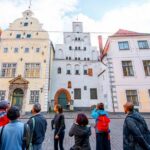
You start the day in Riga at Herdera laukums 6 (meet by 9:00 am). The morning set-up matters here. Your guide doesn’t just count down minutes—they give context while the bus rolls. That way, you’re not arriving at the Hill of Crosses as a random tourist. You’re arriving with a few anchors for what you’re about to see and why it matters in the Baltics.
The drive time between Latvia and Lithuania is usually where day trips go wrong: it becomes wasted sitting. Here, the tour is structured so you’re fed history and cultural background along the way. It also helps you get your bearings fast for the rest of the day.
And yes, the bus is air-conditioned, and you get bottled water. Little comfort perks like that add up on a day that starts early and ends back near the Riga Cathedral area.
You can also read our reviews of more tours and experiences in Riga.

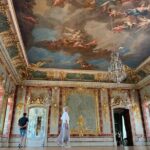
The Latvia–Lithuania border stop at Kalviai (and what to bring)
One of the simplest—and smartest—stops is the Kalviai border photo stop on the Latvia–Lithuania border. You get a short, guided break to understand the border region’s historical significance and take photos marking the crossing.
This is also the moment to make sure you’ve done the boring part: bring your passport. A few people learn this the hard way on these routes, especially when they’re focused on getting good photos instead of having the right document ready.
The stop is brief (about 15 minutes). So keep it light: grab your photos, use the moment for a quick stretch, and then get back on the bus so the rest of your time at your main sites stays intact.
Kryžių Kalnas (Hill of Crosses): the guided meaning plus your own hour
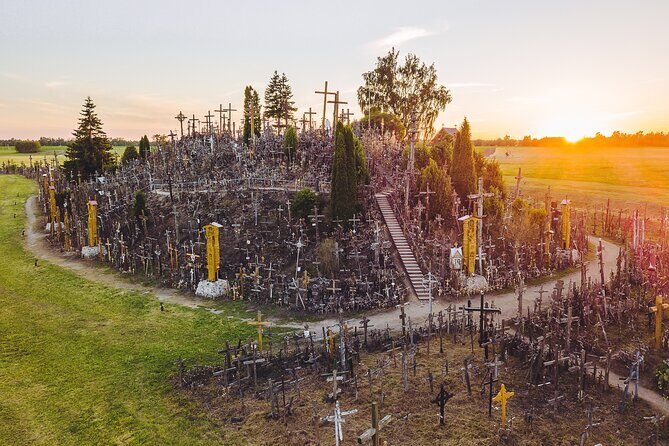
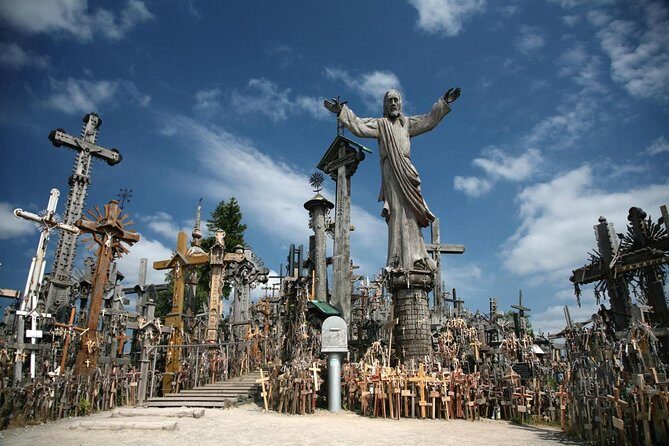
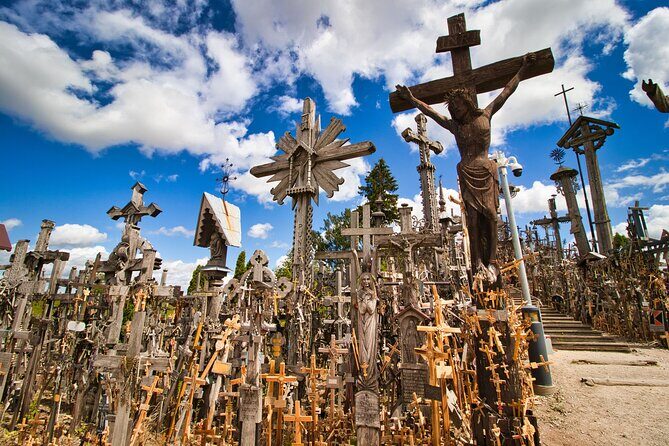
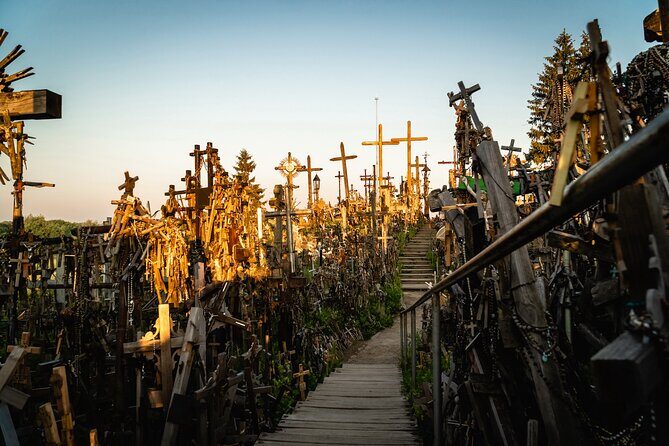
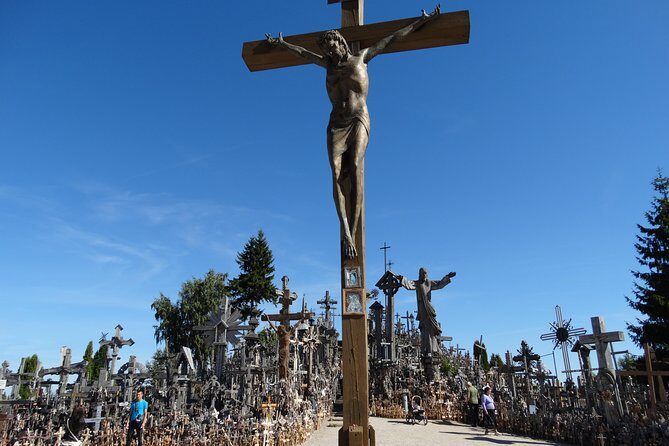
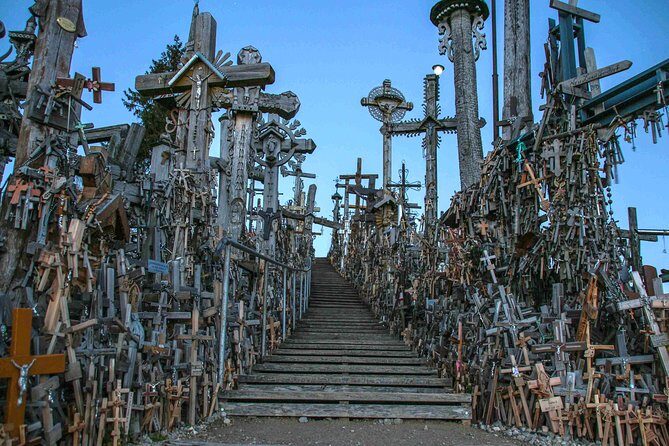
This is the heart of the tour, and it gets treated with respect. At Kryžių Kalnas, your guide explains the site’s history, symbolism, and traditions. After that, you get about one hour of free time to explore independently.
That split—guided meaning first, personal time second—is exactly how I like it. If you rush the Hill of Crosses, it can turn into a quick photo stop. If you’re given time after the explanation, you’re more likely to notice details: the variety of crosses, the emotions people attach to this place, and the way it feels less like a museum and more like a living act of remembrance.
You’ll have the option to place a cross if you wish. If you do, treat it gently. This place carries heavy symbolism. Even if you don’t add anything, you’ll probably want to stand still for a moment and let it land.
Domus Mariae Monastery: the calmer contrast next door
Right near the Hill of Crosses, you can also visit Domus Mariae Monastery, a Franciscan monastery with an open chapel. Your tour includes time here (about an hour).
This stop is more than a bonus. It’s the emotional palette cleanser. After the dramatic symbolism of thousands of crosses, the monastery gives you a quieter angle—space to sit, reflect, and reset your mind before you head onward.
If you’re the type who appreciates places with both history and atmosphere, this monastery visit is one of the reasons this trip feels complete rather than rushed.
Jelgava’s St. Simeon and St. Anna Orthodox Cathedral
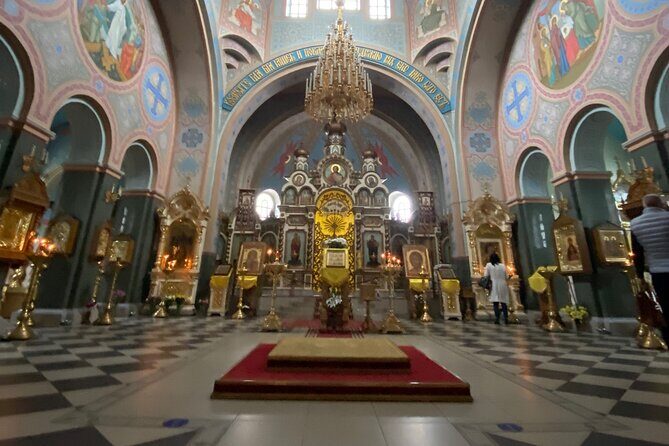
After crossing back toward Latvia, the day shifts from Lithuania’s spiritual landmark to Jelgava’s architectural identity. You visit St. Simeon’s and St. Anna’s Orthodox Cathedral in Jelgava with a guided explanation (about 20 minutes).
This is a “short but meaningful” kind of stop. You’re not asked to study the cathedral for hours. Instead, your guide gives you the story of the landmark and helps you understand what makes it striking in Jelgava’s context.
If you’re building a mental map of Latvia beyond Riga, these short focused visits help a lot. They show you Latvia’s religious and cultural layers, not just the big postcard city.
Mitava riverside promenade and the bridge walk
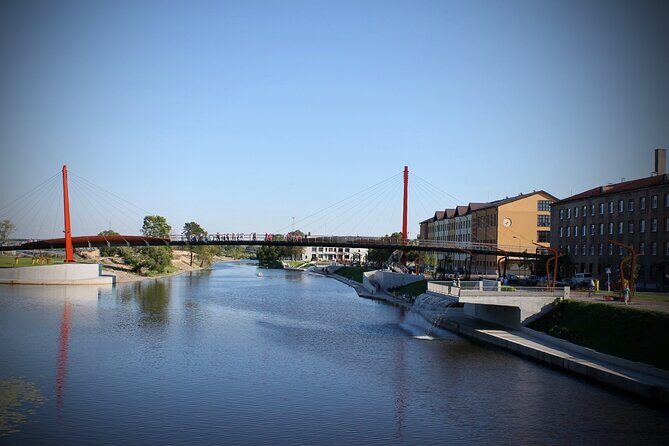
Next comes a scenic, easy-going stretch: a guided walk along the Pedestrian Bridge Mitava and the riverside promenade. Expect about 15 minutes of riverside viewing and city development context as you move.
Here’s the practical tip: this is near water. One review specifically called out mosquitoes along the riverside area, so I’d bring repellent just in case—especially if you’re traveling during warmer months or you’re the kind of person mosquitoes target.
This isn’t a long walking segment, but it’s a nice shift from inside-cathedral time. You get fresh air, river views, and the feeling of Jelgava as a real working city.
Lunch break on Driksas Promenāde: plan it, don’t just hope
You’ll have a scheduled lunch break around Driksas Promenāde. The tour allows about one hour, but here’s the key: lunch and drinks aren’t included in the tour price.
Good news: you can often pre-order your meal during the drive, so food is ready faster when you arrive. This is one of those small logistics choices that makes the day feel smoother. If you know you get hungry fast, pre-order. If you like flexibility, skip it and pick something once you get there—just expect more waiting time.
The lunch stop is part of how the tour keeps you from burning out. And since this tour is about value, I think the best approach is to treat lunch as your one controlled spend of the day. Eat well, hydrate, and then you’ll still have energy for the final palace view.
Jelgava Palace exterior: courtyards, history, and a local taste
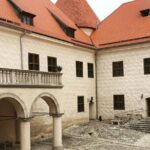
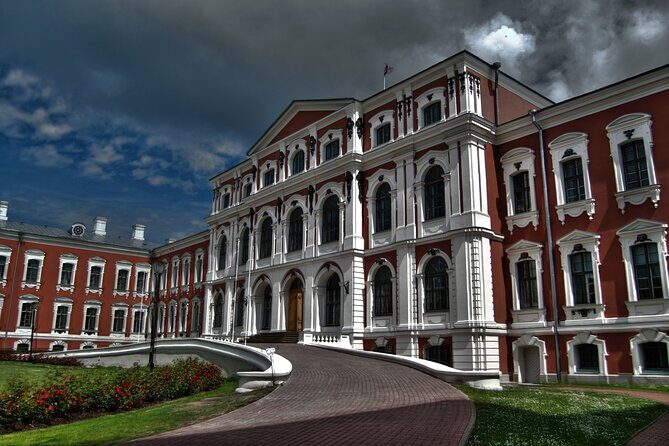
You finish with Jelgava Palace, viewed from the outside (about 20 minutes). Your guide explains its history as the former residence of the Dukes of Courland, and its current role as a university building.
Even though it’s an external visit, it’s a satisfying wrap-up. This is one of those places where you can connect the dots: how ruling power shaped the city, and how the city re-purposed the space over time.
One of the nicest small moments here is the chance to enjoy a quick local taste—one review specifically mentioned a shot of Riga Black Balsam in the palace courtyard. The tour notes a subtle local touch at the end, so you might get that little extra if the timing and day’s flow line up.
What this 7.5-hour day trip really feels like
Let’s talk pacing. You’re out for roughly 7 hours 30 minutes, and the day includes several stops—Riga to a Lithuanian spiritual site, then back for Jelgava’s cathedral and riverside views.
So yes, it’s a full day. But it’s built with breaks that matter: a border photo stop, a guided Hill of Crosses explanation plus one hour on your own, a monastery visit, and then multiple smaller Jelgava stops. That stop pattern is what keeps the long transfers from eating your mood.
If you want to make it even easier on yourself, use the guide’s timing cues. Several people in the feedback singled out guides who kept the group moving clearly and reminded everyone about what’s next and when.
Price and value: what $54.44 buys you (and what it doesn’t)
At $54.44 per person, this tour is not expensive for a cross-country guided day that includes transportation, professional English guiding, and multiple guided stops. The value shows up in what’s included:
- Professional English-speaking guide
- Air-conditioned transportation
- Border photo stop with guidance
- Hill of Crosses guided explanation and included monastery admission
- Jelgava guided cathedral visit plus the palace exterior explanation
- Bottled water
- All taxes and fees
What costs extra is straightforward: lunch and drinks. So the real cost is the tour price plus whatever you spend at lunch.
My practical take: if you’d normally pay for a taxi or private guide to get out to places beyond Riga, the included driving and guidance here makes it simpler. And because Hill of Crosses is one of the few sites where context really changes how you experience it, the guided component isn’t fluff—it’s the difference between seeing crosses and understanding why people leave them.
Which kind of traveler will love this most?
You’ll be a good match if you want a day trip that’s not only “big famous stop, done.” This route is designed for people who like:
- Meaningful sites (Hill of Crosses) with breathing room afterward
- Learning history while riding instead of staring at highway scenery
- A second city in the same day (Jelgava), not just a single destination
- Clear guidance in English and a comfortable vehicle for long stretches
Also: I think it’s a solid option if you’re staying in Riga and want something structured that goes beyond the usual old-town sightseeing. This tour puts Latvia and Lithuania together in one clean storyline.
For families: children must be accompanied by an adult, and most people can participate. Just remember it’s a long day, and there are several seated-to-standing transitions.
A few things to keep in mind before you go
Based on real experiences, here are the practical considerations that can affect comfort:
- Long day expectations: it’s about 7.5 hours total, with multiple sites
- Seating comfort can vary: one review mentioned a van with a narrow aisle and tight seats
- Bring your passport: you cross into Lithuania
- Mosquito repellent can help near Jelgava’s riverside
- Lunch needs budgeting: meal and drinks are not included, though pre-order may help
If you’re the type who hates waiting, pre-order lunch. If you’re the type who hates mosquitoes, bring repellent. Those two small choices can make the day feel a lot easier.
Should you book the Riga Hill of Crosses and Jelgava day trip?
I’d book it if you want a guided day that hits the emotional highlight of the Baltics—Hill of Crosses—and still gives you a real taste of Latvian life in Jelgava. The combination of a guided explanation plus an hour to explore on your own is a strong format. Add in the monastery contrast and you get more than just a checklist of stops.
Skip it only if you’re allergic to long days, or if you prefer to travel slowly with no group schedule at all. This isn’t a linger-at-one-place tour. It’s a structured, high-value day built around several meaningful moments.
If you’re in Riga and you want Lithuania in the same trip without hassle, this one makes a lot of sense—especially when you’re looking at the included guidance, transport comfort, and the included monastery admission for a little extra depth at Kryžių Kalnas.