REVIEW · RIGA
Riga Jewish History Tour
Book on Viator →Operated by Armands Latvia Guide · Bookable on Viator
Riga’s Jewish story hits hard. That’s also why this tour matters: you trace it through architecture, ghetto streets, and major memorials in just a few hours, with your guide ready for questions. I love the private Q&A style with Armands, and I love how the route connects names, buildings, and dates so the city feels personal instead of distant. One consideration: the subject is emotionally heavy, so go in with your head and heart ready.
In This Review
- Key Highlights at a Glance
- A Private Route Through Riga’s Jewish Landmarks
- Meeting Outside Old Riga: Easy Pickup, One Small Twist
- Art Nouveau Riga: Eisenstein’s Buildings and Isaiah Berlin’s Birth Connection
- Latgale Suburb: The WWII Ghetto Area That Still Feels Present
- Great Choral Synagogue Memorial: July 4, 1941 in Plain Sight
- Rumbula Forest Memorial: Late-1941 Extermination History You Can’t Skip
- Riga Ghetto and the Latvian Holocaust Museum: A Story Arc, Not Just Dates
- Riga Synagogue on Peitavas Street: Art Nouveau Form with Egyptian Motives
- Price and Value: What You Pay For, What’s Free, What’s Not
- Your Guide Matters: Armands’ Q&A Style and Human Pace
- Practical Tips for a Thoughtful, Smooth Visit
- Who Should Book This Riga Jewish History Tour?
- Should You Book This Tour?
- FAQ
- How long is the Riga Jewish History Tour?
- Is the tour private?
- What language is the tour offered in?
- Is there pickup from my hotel?
- Are admissions included for the sites?
- Are donations required anywhere?
- Is the Riga Holocaust Museum donation included?
- Do I need a head covering?
- Will I get a ticket on my phone?
- What is the cancellation policy?
Key Highlights at a Glance
- Art Nouveau with Jewish roots: Mikhail Eisenstein’s work and a link to philosopher Isaiah Berlin
- Ghetto-area time travel: Latgale suburb feels like it’s still carrying WWII shapes
- Memorial stops with exact history: July 4, 1941 and the Rumbula killings in late 1941
- A museum stop that frames the story: Jewish life before the Holocaust, plus the ghetto and Latvia’s Holocaust
- A functioning monument experience: the Peitavas Street synagogue in Art Nouveau style with Ancient Egyptian motives
- Flexible pacing: you can linger and ask questions, and the guide adjusts rather than rushing you
A Private Route Through Riga’s Jewish Landmarks
This is a 3 to 4 hour private tour of Riga focused on Jewish history and the Holocaust in Latvia. You get private transportation and a dedicated guide in English, so you’re not stuck listening to a crowd or asking questions “at the end.” I like that it’s structured enough to hit the key sites, yet open enough that you control the pace.
At $96.33 per person, it lands in a reasonable price range for a private, guided, multi-stop experience in central Riga. You’re paying mostly for time, context, and getting you from place to place without hassle—while the listed memorials and museum stop have free admission tickets (with some donations required, which I’ll explain below).
You should also know what kind of tour this is. It’s not a sightseeing loop with light commentary. The route includes memorials and extermination history, so plan for silence, reflection, and a serious tone.
You can also read our reviews of more historical tours in Riga



Meeting Outside Old Riga: Easy Pickup, One Small Twist
Pickup starts at 9:00 am, and you’ll meet outside of your hotel or apartment. The reason for the meet-point detail is practical: they can’t park the car in the Old Riga area, so you wait outside rather than expect a curbside stop right at the door.
If you’re staying deep inside Old Riga, that’s the only “gotcha.” Once you’re outside and ready, the rest feels smooth—your guide drives you between stops so you can focus on the story, not directions.
Art Nouveau Riga: Eisenstein’s Buildings and Isaiah Berlin’s Birth Connection
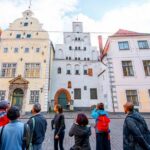
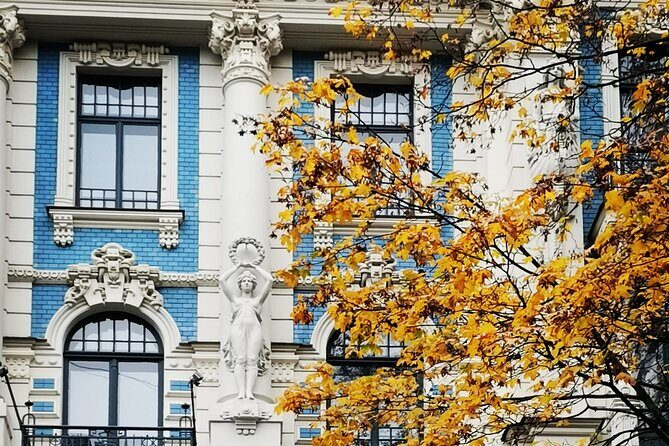
The first stop is Art Nouveau Riga, where you get a quick but meaningful look at how Riga’s look is tied to Jewish life and legacy. Here, you’ll learn about buildings designed by Jewish architect Mikhail Eisenstein, and you’ll also hear how one of those buildings is connected to philosopher Isaiah Berlin.
Why I like this opening: it doesn’t start with tragedy. It starts with craft, identity, and influence—people left marks on the city long before WWII. And because your guide points out architectural details as you move, you’re not just standing in one spot trying to read plaques. You’re snapping photos with context, which makes the whole “Art Nouveau Riga” part much more satisfying.
Time at this stop is about 30 minutes, so treat it like a strong orientation round: look, listen, and ask questions before you move on.
Latgale Suburb: The WWII Ghetto Area That Still Feels Present
Next comes the Latgale suburb, described as former territory of the Riga Jewish Ghetto. The emphasis here is on survival of the visual record—many buildings keep the same shape they had around 80 years ago in WWII time.
This is the kind of stop where you get something you can’t buy with a museum ticket: you see how a city can preserve memory through its built form. If you’re the type who likes to understand how history “lives” in streets, you’ll appreciate this stop.
It’s also about 30 minutes, so don’t expect a full neighborhood tour. Instead, focus on what your guide points out and use the time for a few photos and a clear sense of place.
Great Choral Synagogue Memorial: July 4, 1941 in Plain Sight
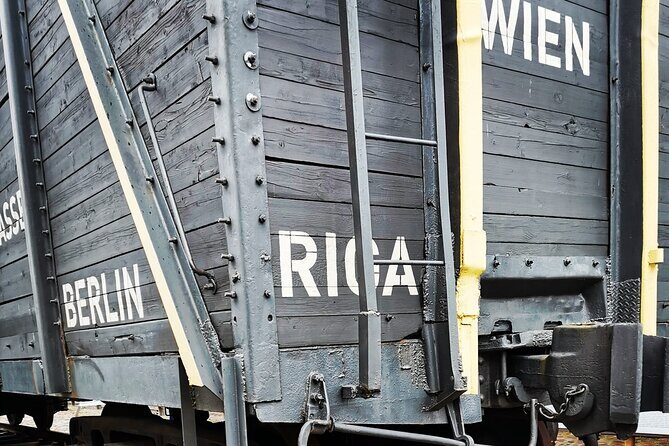
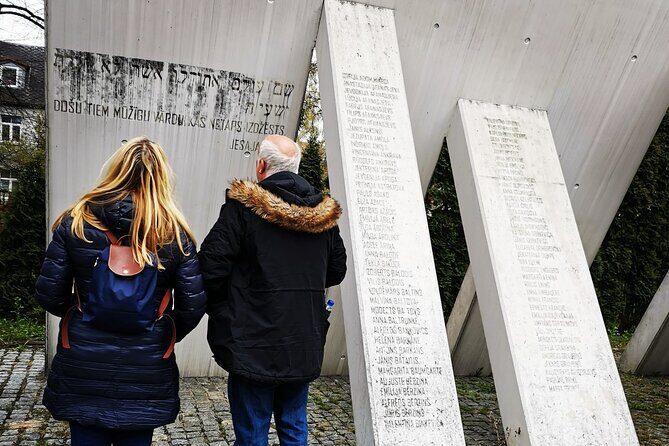
The route then shifts fully into Holocaust memorial territory with the Great Choral Synagogue Memorial. On July 4, 1941, more than 300 Jewish refugees from Lithuania and local Latvian Jews were herded into the synagogue basement and it was intentionally burned to the ground. There is a memorial place today to mark what happened.
This stop is short—about 15 minutes—but it carries a lot of weight. The guide’s job matters here: you need someone to connect the date and the event to the larger pattern without turning it into a rushed lecture.
I also like that this stop is specific. Vague tragedy stories can make the mind wander. Exact dates and exact places help you stay grounded. Bring your attention, not just your camera.


Rumbula Forest Memorial: Late-1941 Extermination History You Can’t Skip
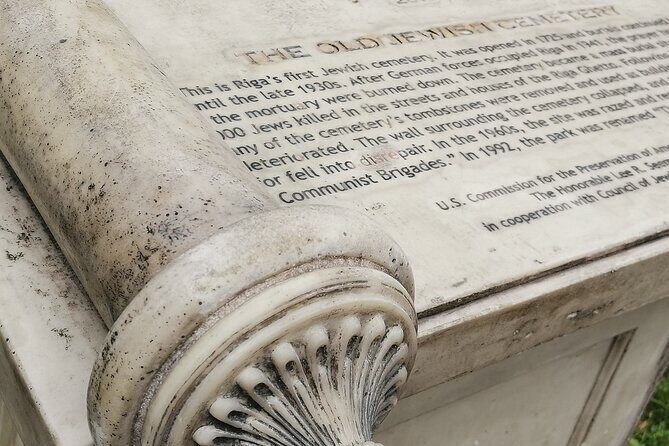
After that, you go to the Rumbula Forest Memorial, where the story becomes even more stark. In November 1941, Nazi authorities decided to completely exterminate Jewish prisoners of the Riga ghetto. During events on November 30 and December 8, 1941, more than 25,000 people were killed in the Rumbula forest, including about a thousand Jews deported from Germany. A full memorial opened on November 29, 2002.
This is the longest stop besides the museum—about 1 hour—and that extra time matters. It’s not just about learning facts; it’s about being able to stand there, absorb, and reflect without feeling yanked along by a schedule.
If you prefer tours with a “fit the facts in fast” pace, this might feel slower than you expect. But if you want your guide to treat the site with care—which they do—then the time gives it room to land.
Riga Ghetto and the Latvian Holocaust Museum: A Story Arc, Not Just Dates
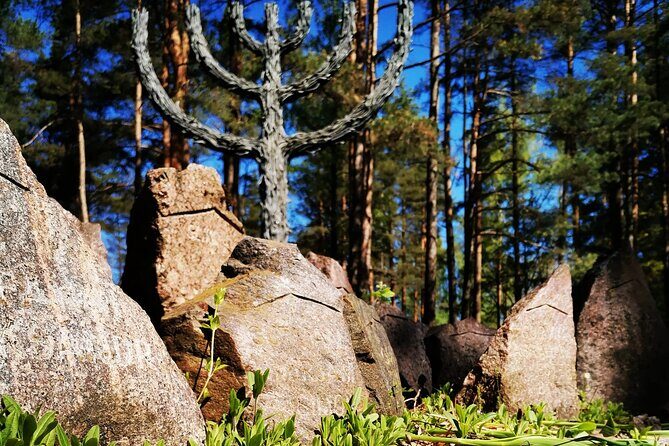
The next stop is the Riga Ghetto and Latvian Holocaust Museum, described as a window into the story of the Riga Ghetto, the Holocaust in Latvia, and Jewish life in Latvia before the Holocaust. You’ll have about 30 minutes here.
What makes this valuable is the framing. A memorial can tell you what ended. A museum helps you understand what existed before. That contrast is often what turns names and numbers into something more human—less like a spreadsheet of suffering, more like a set of communities and daily lives that were taken away.
I also found it useful that the tour includes this museum stop right after Rumbula. It prevents the mind from closing after the darkest moment. Instead, you get to see the broader arc: community, ghetto reality, Holocaust events, and then a look back at life before.
I’ve learned you’ll likely want a souvenir or book afterward if you want to keep reading. In my experience, there’s usually something to take with you for later.
Riga Synagogue on Peitavas Street: Art Nouveau Form with Egyptian Motives
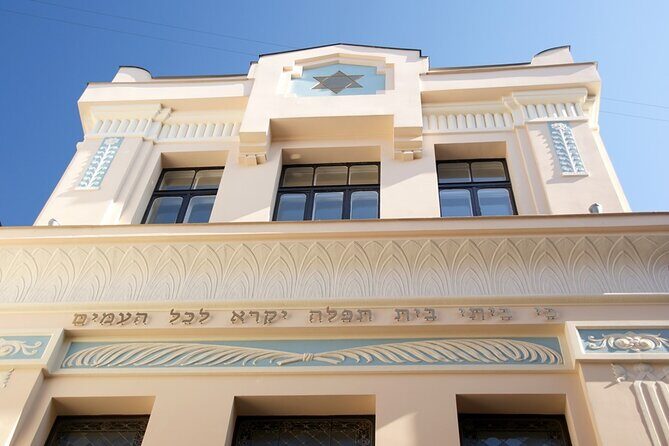
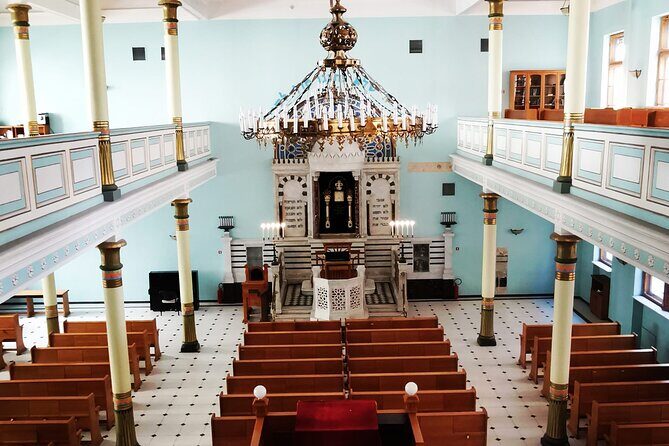
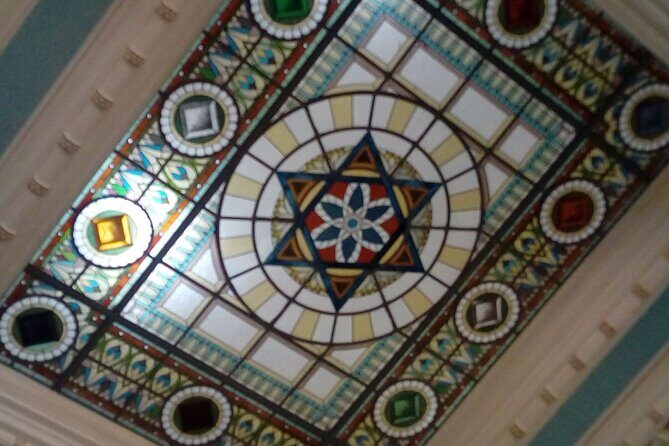
The final stop is the Riga Synagogue on Peitavas Street, one of Riga’s Art Nouveau jewels and a significant cultural monument. The synagogue was built 1903 to 1905 and designed in the Art Nouveau style with Ancient Egyptian motives.
You get about 45 minutes here, which is generous for a guided stop. Use it to look closely at details and then ask your guide about how architectural styles and cultural identity can sit side by side. It’s also a fitting endpoint: after memorial history, you end with a living monument of design and Jewish cultural presence.
One practical note: there is a required donation for the synagogue given on site, and you should plan for that. The tour’s listed admissions are free, but this one includes a donation request.
Price and Value: What You Pay For, What’s Free, What’s Not
Let’s talk money in a practical way. You pay $96.33 per person for a private guided tour with transportation. That’s not just time; in Old Riga, moving between memorials and sites takes real effort on your own.
On the cost side, the listed admission tickets for the stops are free. That includes Art Nouveau Riga, Latgale suburb, the Great Choral Synagogue Memorial, Rumbula Forest Memorial, and the museum and synagogue stops in the itinerary.
What you should budget for:
- A required synagogue donation on site
- A donation to the Riga Holocaust Museum of €5.00 per person
To me, this feels fair. You’re not paying admission fees at each stop. You’re supporting the preservation work and the specific institutions connected to the sites.
Also, this tour tends to be scheduled ahead. On average, it’s booked about 59 days in advance, so if you have firm dates, don’t wait until the last minute.
Your Guide Matters: Armands’ Q&A Style and Human Pace
The biggest difference between a “route” and a “tour” is the guide. In my experience with Armands Latvia Guide, the point is not just facts—it’s how he handles your questions and how he sets a respectful pace.
I appreciated that the guide didn’t rush and made room for you to do a bit of exploration at each place. In fact, my timing ran longer than the original plan because we spent extra moments where the story needed it. That flexibility is a real quality-of-life benefit on tours like this.
I also liked a more honest approach to questions. When something wasn’t known, the guide didn’t pretend. That’s important here. Serious history deserves careful answers, not confident filler.
If you’re visiting on a Saturday, keep in mind that some things may be closed for Shabbat. In my experience, Armands handled this by swapping to another place of interest rather than leaving you stuck without options.
Practical Tips for a Thoughtful, Smooth Visit
A few details will help you get the most out of the day without overthinking it.
- Dress code: any is fine as long as it’s not naked. If your head won’t be covered, the guide provides a kipa.
- Bring comfort: you’ll be outside and moving, including memorial sites where you’ll likely want a steady stride and time to stand.
- Bring questions: the tour is private, so ask away. This format works best when you lean in and talk.
- Camera planning: the Art Nouveau sections are great for photos, but remember the memorial areas need a quieter, slower approach.
And mentally: expect the story to move through different emotional temperatures. That’s part of why the pacing matters.
Who Should Book This Riga Jewish History Tour?
This tour fits best if you want:
- A private guide who answers questions directly
- A route that connects architecture with Holocaust memory
- A practical way to see multiple sites without figuring out transport and timing on your own
It’s also a good option if you like tours where the guide adjusts the schedule slightly based on what you want to spend more time on.
If you’re looking for a light, fast “see everything” city walk, this may not match your mood. This experience asks for attention and respect.
Should You Book This Tour?
Yes—if you want the story of Riga’s Jewish past told through the city itself, not only through a few museum panels. The value is strong for what you get: private guide time, transportation, free admission at the listed stops, and a route that links major memorial history with Art Nouveau context you can actually photograph and remember.
Book it when you can, especially if your dates are fixed, because it’s commonly reserved about two months out. And go in knowing the emotional tone is real. If that’s okay with you, this tour will give you something you can carry long after you leave Riga.
FAQ
How long is the Riga Jewish History Tour?
The tour runs about 3 to 4 hours.
Is the tour private?
Yes. It’s a private tour/activity, and only your group participates.
What language is the tour offered in?
The tour is offered in English.
Is there pickup from my hotel?
Pickup is offered. You should wait outside of your hotel or apartment because parking in Old Riga isn’t allowed for the tour vehicle.
Are admissions included for the sites?
The itinerary lists free admission tickets for each stop.
Are donations required anywhere?
Yes. There is a required donation for the synagogue given on site.
Is the Riga Holocaust Museum donation included?
No. There is a donation to the Riga Holocaust Museum of €5.00 per person.
Do I need a head covering?
Any dress code is fine, and if your head won’t be covered by cap, hat, scarf, or other, a kipa will be provided.
Will I get a ticket on my phone?
Yes. The tour uses a mobile ticket.
What is the cancellation policy?
You can cancel for a full refund up to 24 hours in advance. Free cancellation is available if you cancel at least 24 hours before the experience’s start time.