REVIEW · RIGA
Private Soviet Riga tour
Book on Viator →Operated by TRAVEL MANAGEMENT SIA · Bookable on Viator
Riga’s Soviet story is all around you. This private 2-hour walk connects the dots between monuments, squares, and the places where power felt close to everyday life.
I like two things a lot. First, the guide is top-notch: Edvards is clearly passionate, and he explains the topic in plain language. Second, you get real give-and-take; you’re not stuck in a loud group, so you can ask questions as you go and get straight answers.
One thing to consider: the route covers deportations, secret police control, and the years leading up to the Soviet collapse. If you prefer lighter sightseeing only, this may feel intense.
In This Review
- Key highlights you’ll actually care about
- A 2-hour Soviet Riga tour that doesn’t feel like a lecture
- Starting at Latviešu strēlnieku laukums: how the guide frames the whole era
- Museum of the Occupation: deportations explained with the scale that matters
- 1991 Barikazu Laukums and the barricades moment
- Baltic Way Footprint Monument: a massive protest, not a battle
- Freedom Monument: how a symbol survived the Soviet years
- Nativity of Christ Cathedral: religion under Soviet rule
- The Hotel Latvia story at Radisson Blu Latvija: where Western tourists could stay
- Brīvības iela (former Lenin Street): streets, housing, and fashion in Soviet Latvia
- KGB Building: fear, recruitment, and that view toward Siberia
- Dailes Theatre: Soviet architecture and the collapse that followed
- What Edvards brings to the walk (and why people rave about it)
- Price and group size: does $180.62 feel fair?
- Timing, walking comfort, and where the route leaves you
- Who this tour suits best
- Should you book this Private Soviet Riga tour?
- FAQ
- How long is the Private Soviet Riga tour?
- What’s the group size and price?
- What language is the tour offered in?
- Where does the tour start and end?
- Is admission included at the stops?
- Is hotel pick-up or drop-off included?
Key highlights you’ll actually care about
- Private pacing: just your party, with time for questions instead of rushing
- Edvards’ personal angle: he weaves in his own family experience to make the story feel human
- Free site stops: each of the key monuments and museums is marked as free during the tour
- The full arc of Soviet power: from Stalin-to-Gorbachev framing to the independence push
- Life under surveillance: the Hotel Latvia/KGB-linked story lands in a very specific place
- Ending near old town: you finish at Dailes Theatre, about a 15-minute walk to the heart of Old Riga
A 2-hour Soviet Riga tour that doesn’t feel like a lecture
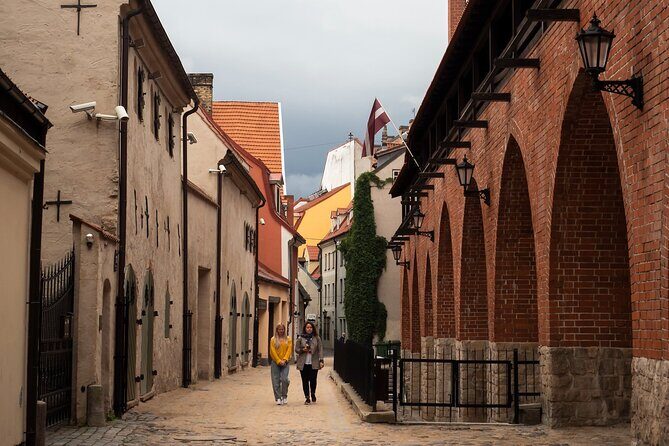
Soviet history can turn into a long, gray slide show. This tour keeps it on the street. You walk between major landmarks and talk about what they meant in that time—who had control, what people feared, and how Latvia held on to its identity.
The format is also a big part of the value. You’re with a professional guide and only your group. That matters because the topic has lots of moving parts—Stalin-era imagery, later shifts, and then the late Soviet years where things started to break open. A private walk lets you pause when something sparks your interest.
And it’s short enough to fit into a normal Riga day. Think of it as a history “primer” that makes the rest of your trip easier to understand. Afterward, you’ll see the monuments and street names with clearer context.
You can also read our reviews of more private tours in Riga

Starting at Latviešu strēlnieku laukums: how the guide frames the whole era
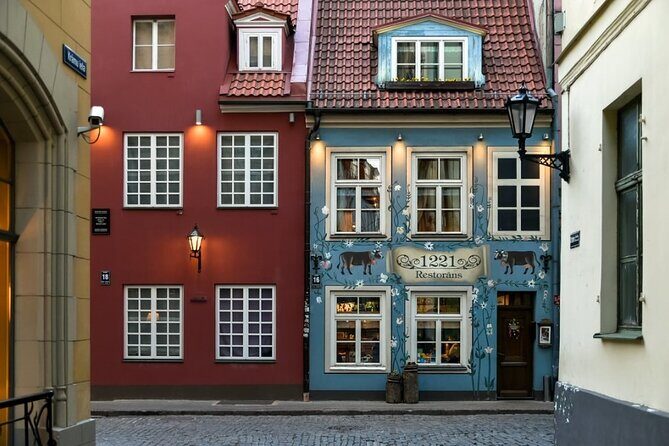
Your walk begins at Latviešu strēlnieku laukums in the Centra rajons area. This stop sets the tone fast. The guide gives you a quick map of Soviet-era changes—moving through different periods, with the monument tied into the broader idea of Soviet cultural heritage.
Why this works: it’s not only about a single date. It’s about the method—how the Soviet system used symbols, public space, and official narratives to tell people what to think and feel.
A practical note: this first stop is brief (about 15 minutes). You’ll get the overall storyline early, but you won’t feel trapped in details yet. If you’re the type who likes to ask questions, this is a good place to start, because it helps you follow the later stops.
Museum of the Occupation: deportations explained with the scale that matters
Next is the Museum of the Occupation of Latvia. The focus here is specific: the deportations to Siberia, including the reasons, the scale, and the impact.
This stop can be emotional. That’s not the tour being dramatic—it’s just the subject. The tour gives you enough structure to understand why it happened and what it did to families and communities. In a city walk, that kind of context is powerful. It turns a monument you might otherwise breeze past into something you can read.
Time is short here (about 10 minutes). So if you want to spend more time, you might later return on your own. But even with the brief stop, you’ll leave with a clearer sense of what “occupation” meant in real life, not just in textbooks.
1991 Barikazu Laukums and the barricades moment
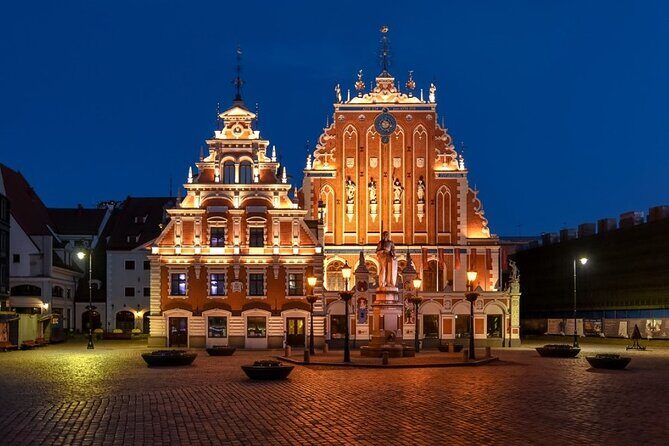
Then you shift into the late Soviet years at 1991 Barikazu Laukums. This is the era of barricades—when the fight for Latvia’s independence comes to the front of the story.
What makes this stop worth your feet: the guide treats it like a turning point, not like a distant event. You get the atmosphere of the time—what people were trying to protect, and why staying stubborn mattered. Even without going deep into dates, you start to understand the momentum behind the political change.
This stop is also brief (about 10 minutes). If you’re the type who likes to feel the emotional weight, make sure you ask at least one question here. The guide’s explanations help you connect the barricades to the broader independence timeline.
Baltic Way Footprint Monument: a massive protest, not a battle
After that comes the Baltic Way Footprint Monument, tied to the Baltic Way—described as the largest non-violent anti-Soviet demonstration in the Baltics. The tour explains the logistics, the mood, and the impact.
This is one of the stops where you might realize something important: non-violent actions still require huge coordination and real courage. On a walking tour, it’s easy to treat monuments as still objects. Here, the guide helps you see them as events—something that moved people, gathered strength, and forced attention.
Time is tight (about 10 minutes), so you’ll get the key idea without getting buried in background. If you want to go deeper later, you’ll know what to look up: how it was organized and why it mattered.


Freedom Monument: how a symbol survived the Soviet years
One of Riga’s iconic landmarks follows: the Freedom Monument. The tour focuses on what it meant and how it survived the Soviet period.
This is a smart stop because it connects memory to place. You learn not just what the monument looks like, but why it remained a kind of anchor for national identity when the political environment was trying to drown out local meaning.
You get about 10 minutes here, which is enough to understand the symbolism. Then, the next stops make it feel even more grounded—because you’ll see how power worked day-to-day around the same city.
Nativity of Christ Cathedral: religion under Soviet rule
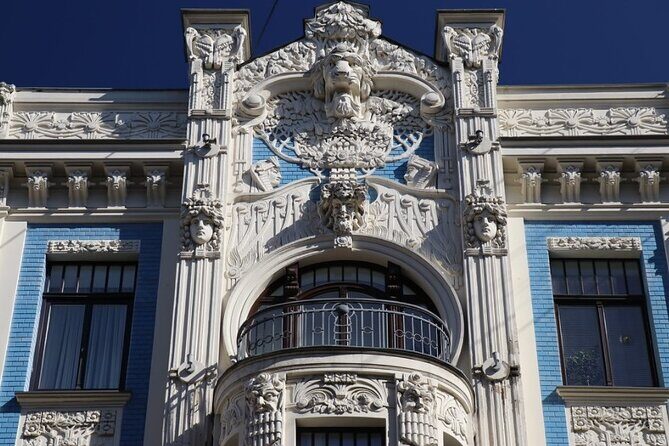
Then you visit the Nativity of Christ Cathedral, an Orthodox cathedral. The guide discusses the role and treatment of religion during the Soviet period.
Why I think this is a valuable part of the route: it expands the story beyond politics and policing. Religion wasn’t only a belief system; it was part of how communities stayed connected and how authorities tried to control social life.
Time is about 10 minutes. You’re not meant to become an expert in one stop. Instead, you get a framework for understanding how ideology affected churches, worship, and everyday practice.
The Hotel Latvia story at Radisson Blu Latvija: where Western tourists could stay
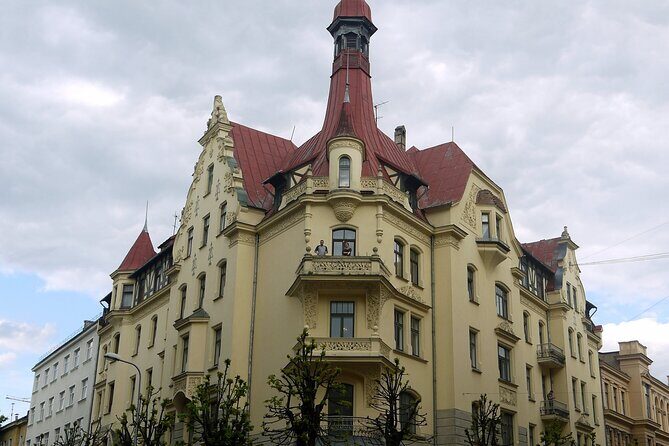
Your tour continues at Radisson Blu Latvija Conference & Spa Hotel, Riga, formerly Hotel Latvia. This stop is vivid because it’s about lived reality for the city—and it’s specific.
The guide explains that it was the only hotel where Western tourists were allowed to stay in Soviet Riga, and that the famous rooms were bugged by the KGB. That combination—limited access for outsiders plus surveillance inside—captures the Soviet approach better than a hundred general statements.
You’ll have about 10 minutes here. You don’t need much longer to grasp the point: even when something looked like hospitality, it came with monitoring. That’s the kind of detail that makes your “Soviet Riga” lens click.
Brīvības iela (former Lenin Street): streets, housing, and fashion in Soviet Latvia
Next is Brīvības iela—Freedom Street—which was formerly Lenin Street. This section of the walk covers Soviet-era residential architecture and Rīgas Modes, described as the city’s most famous fashion house.
This stop is a reminder: Soviet power didn’t only show up as official propaganda. It shaped the streets people lived on, the buildings they worked around, and even the style industry and public image.
You get about 10 minutes. It’s enough to connect the political past with something you can still see clearly today—street layout, architecture patterns, and the presence of local brands.
KGB Building: fear, recruitment, and that view toward Siberia
Then comes one of the most dramatic parts of the tour: the KGB building, the HQ of the Russian secret police in Latvia, described as the highest building in Riga. From the top, the tour notes you can see all the way to Siberia.
The guide covers KGB recruitment methods and interrogation methods. This is not a comfortable topic, and the tour handles it with a did-you-know clarity rather than cheap shock value.
Why it’s worth it: when you understand where power sat physically—how high up, how central, how close—you start to understand what the system was trying to signal. It wasn’t just policy. It was presence.
Time is about 10 minutes. That’s enough to grasp the main concepts and get answers, but not enough to process everything emotionally if you’re sensitive to the topic. So I’d treat this stop like a “pay attention” moment. Ask your questions if you need context.
Dailes Theatre: Soviet architecture and the collapse that followed
Your final stop is Dailes Theatre. The tour frames it as an iconic example of Soviet-era architecture, and it brings the story to the collapse of the Soviet Union.
This is a good ending choice. It lets the walk end not with police or fear, but with a cultural landmark tied to the era. When the guide talks about the collapse afterward, the point lands better: systems fall, but buildings and street layouts remain, carrying memory forward.
You get about 15 minutes at this last stop, and then the tour finishes at Dailes Theatre. It’s approximately a 15-minute walk to Old Riga, so you can stay in the same area and still reach the old town for dinner or a final look at the most photogenic streets.
What Edvards brings to the walk (and why people rave about it)
The strongest theme you’ll notice during the tour is how human it feels. Edvards doesn’t just rattle off dates. He’s extremely passionate about the topic, and he explains it in a way that’s easy to follow even if Soviet history isn’t your favorite subject.
Two review-based points matter here. First, his knowledge is deep and practical—he links landmarks to meaning, not just facts. Second, he brings in his own family experience in the telling. That personal thread is what turns the tour from sightseeing into understanding.
If you like history with context, this is the right format. It’s the difference between looking at a monument and learning what it meant to the people who lived under the system.
Price and group size: does $180.62 feel fair?
The price is $180.62 per group, up to 15 people, for about 2 hours. That’s private-tour pricing, which can sound steep if you’re thinking per person.
Here’s the practical way to judge value. If you’re traveling with even a small group, the cost per person drops fast compared to taking multiple separate tours. You also get a guide throughout, plus multiple stops that are marked as free admission during the tour. That combination—private time with a guide plus no site ticket burden—makes the price feel more reasonable.
Also, since it’s offered in English and uses a mobile ticket, it’s designed to be easy to use without extra friction. And because it’s booked far in advance on average, planning ahead can help you get a time that fits your schedule.
Timing, walking comfort, and where the route leaves you
This is a walking tour in central Riga, with stops spaced so you’re not moving nonstop. Still, you should plan for a solid stroll through the city streets and between major landmarks.
One logistical detail that affects your day planning: hotel pick-up or drop-off isn’t included. So you’ll want to start at Latviešu strēlnieku laukums and finish at Dailes Theatre. Since Dailes Theatre is about a 15-minute walk to Old Riga, I’d plan your evening so you can naturally continue into the old town afterward.
Bring comfortable shoes and a light layer. Riga weather can swing, and you’ll feel it during the between-stop walking even if the stops themselves are short.
Who this tour suits best
This private Soviet Riga tour is especially good if you:
- want history tied to real places you can point to later
- prefer a question-friendly guide instead of a bus-style presentation
- like understanding the Soviet period through monuments, architecture, and the street names themselves
It’s also a fit for couples, small families with older kids (children must be accompanied by an adult), and small groups. If you’re traveling with mobility needs, the tour is marked as near public transportation and most travelers can participate, but you should still consider how your group handles walking between central stops.
Should you book this Private Soviet Riga tour?
I’d book it if you want to understand Riga beyond its postcard scenes. The route is tight, the guide adds context quickly, and the personal touch from Edvards helps the story feel real instead of scripted.
Skip it only if you strongly dislike political and human-impact topics. This tour spends time on deportations, secret police methods, and the years around independence—so the emotional tone is heavier than a typical architecture or food walk.
If you’re on a first trip to Riga and you want the Soviet-era framework that makes everything else click, this is a smart use of 2 hours.
FAQ
How long is the Private Soviet Riga tour?
It’s listed as about 2 hours.
What’s the group size and price?
It’s $180.62 per group, up to 15 people.
What language is the tour offered in?
The tour is offered in English.
Where does the tour start and end?
It starts at Latviešu strēlnieku laukums and ends at Dailes Theatre on Brīvības iela 75 (about a 15-minute walk to the old town).
Is admission included at the stops?
The tour details mark each stop’s admission as free.
Is hotel pick-up or drop-off included?
No, hotel pick-up or drop-off isn’t included.